

Editor’s note: Names of students who attended the 2025 field trip to the Santa Clara Muslim Community Association are presented as pseudonyms due to the sensitive nature of the field trip and wide-spanning media coverage of the event.
A lawsuit filed against the Palo Alto Unified School District over a field trip that allegedly “conveyed preference for one religion and disfavored or stigmatized others” has picked up significant media attention over the past few days.
As a student in the Social Justice Pathway, the program that undertook the field trip, I want to share critical context and information that the lawsuit either does not include or misrepresents.
The 16-page federal court document published by the Palo Alto Daily Post last week includes 86 paragraphs, and I have no interest in individually addressing every point brought up in the complaint. In fact, I think some valid concerns are raised. What I do have an interest in, however, is ensuring that the conversation surrounding this mosque field trip doesn’t exclude the perspectives of the very students who attended it.
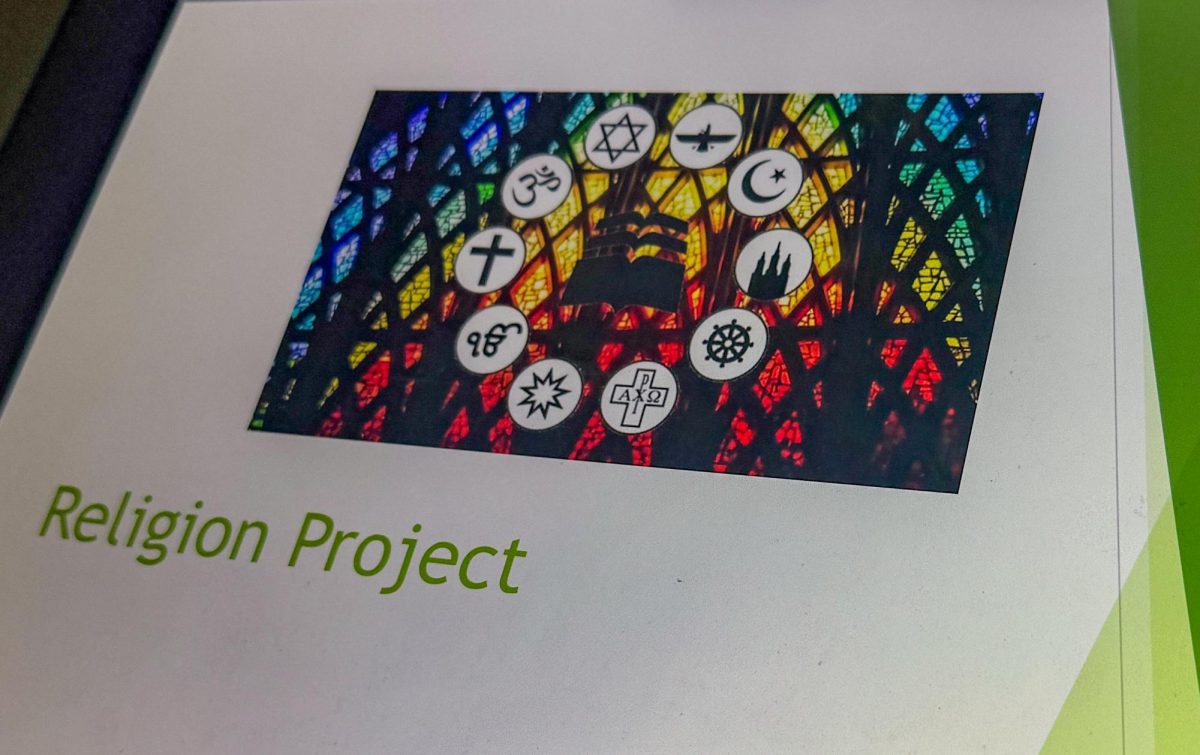
The field trip to the Santa Clara Muslim Community Association took place during the first semester of the 2025-26 school year, when our class was taking Humanities. Almost half of this course was centered around the religion unit. In this unit, we wrote essays and gave presentations on Judaism, Christianity, Islam, Hinduism, Buddhism, Bahaism and Taoism. This is to say, the field trip to the mosque was part of a broader educational effort on religion.
I did not attend the field trip (which I was not penalized for) because of illness, but the majority of my peers in SJP did. What they said to me in interviews this week is that claims presented in the lawsuit, which also named Paly Principal Brent Kline, lack significant information and nuance.
The lawsuit alleges the field trip “exposed students to foreseeable discriminatory and ideological messaging, and failed to protect students from unequal treatment based on religion.”
Ryan, a senior who went on the field trip, said he rejects that claim.
“One of the first things that they told us when we got there was that … if you practice other religions or don’t partake in a religion, that’s totally fine,” Ryan said. “The purpose of the field trip was to learn and see things about a different religion, but they didn’t try to make their religion seem supreme compared to others or try to belittle other types of religions that people practice.”
Ryan also said that although the Santa Clara Muslim Community Association did share about its social justice work — by nature a good fit for our SJP program — Islam was not posited as “uniquely aligned” with social justice as the lawsuit claims.
“They didn’t specifically say that Islam is such a social justice religion, but they just showed that they can practice social justice through their religion,” Ryan said.
The idea of the intersection between social justice and religion was explored in class through each of the seven religions we studied, and was not an idea specifically taught in relation to Islam. During our religion unit, we also did not shy away from the conflicts between certain social justice values and aspects of many religions, including Islam.
Tommy, a senior who went on the field trip, said he recognized these conflicts while visiting the prayer rooms at the mosque.
“It was definitely a learning experience because I had never really known that prayer rooms were separate between men and women because I’ve been Christian Catholic my whole life,” Tommy said. “A lot of what we learn about SJP promotes more values of equality, and it’s kind of hard to have that when you’re segregating the men from the women. It’s interesting to see, and I was just observing; that’s what the whole field trip was about.”
The lawsuit’s claim that the field trip was “encouraging or requiring students to don religious attire” has been made a central point of a lot of the news coverage, with it even making it into the headline in articles from the New York Post and The Times of Israel.
Marina, a senior who went on the field trip, however, said the covering of hair for women was only encouraged in sensitive prayer areas, which were optional to enter.
“Everyone had a choice if they wanted to take their shoes off and go in or not,” Marina said. “I just put my hair under my hoodie. … You didn’t have to go inside to that area, and I didn’t end up wearing the hijab anyways.”
In an interview with The Paly Voice, David Rosenberg-Wohl, the attorney representing the plaintiffs behind the lawsuit, said SJP inherently prioritized Islam over other religions by visiting the Muslim Community Center and not other religious sites.
“They don’t have to actually have someone say ‘This is only true of Islam,’ but it is nonetheless true that that is what the school chose to feature,” Rosenberg-Wohl said. “The school did not choose to go to a church. The school did not choose to go to a synagogue. The school chose to highlight a connection that it wished to make between one faith and a political course of study.”
I can certainly understand skepticism about why Islam was the only religion highlighted in a field trip. After all, it can be argued that if you can’t show every religion through a field trip, none of them should be shown. I would say, however, that considering the hands-on learning goals of SJP, this binary perhaps isn’t realistic. During our immigration unit, for example, we visited Angel Island to learn about the origins of California’s Asian immigrant community. I suspect you’d be hard-pressed to find anyone interpreting that trip as the school assigning some elevated social justice standard to Asian immigrants specifically.
By Rosenberg-Wohl’s reasoning, though, you’d have to. You would also have to say SJP placed special social justice importance on the seven religions we studied in class by not studying, say, Shintoism or Zoroastrianism. Visiting a place to learn about it isn’t the same as putting it on a pedestal, even if you don’t visit everywhere else too.
According to Marina, it is important to remember the role that field trips play in Social Justice Pathway learning.
“In SJP, we have field trips when we have the resources and opportunity to actually see that in person, to gain that experience,” Marina said.
There is one concern expressed in the lawsuit that I do not wish to dismiss: the presence of Zahra Billoo, a civil rights attorney and executive director of the Council on American-Islamic Relations’ Bay Area chapter. Past statements of hers have been called hateful by the Anti-Defamation League, and I likewise believe many of her past statements to be grossly inappropriate. I understand it may not be realistic to vet every person that a class is exposed to, but the field trip could have easily been enjoyed without her presence.
Despite my belief that Billoo should not have been part of the field trip, it is important to highlight that Billoo’s exposure to students was limited in its scope.
According to Katherine, a senior who went on the field trip, Billoo talked about her role in legally defending victims of Islamophobia before taking questions at the end.
“I remember that she was a lawyer and that she specialized in doing Islamic discrimination cases,” Katherine said. “For a bit she did a Q&A of just general questions about Islam, and then she was mostly talking about how the mosque center is a place where people can get legal help if they are facing discrimination.”
With the plaintiff’s version of the lawsuit as the only information available in most media for the past week, reactionary coverage of the lawsuit has spread worldwide. Posts by right-wing news aggregators on social media are accruing millions of views claiming that girls were forced to wear hijabs, and conservative political commentator Ben Shapiro shared a post characterizing the field trip as “taxpayer-funded religious indoctrination.”
The vast majority of the people demonizing the teachers who arranged and chaperoned this field trip simply don’t know them. The idea that they would be working to indoctrinate students into Islam, or any religion, is an idea extremely foreign to me as a student who has had them as my teachers for the past two years. But this narrative is nonetheless dominating media coverage of the event.
With this level of attention toward SJP’s mosque field trip — all coming from one perspective — it’s necessary to get other voices involved. And once you consider these first-hand accounts from my peers and me, it becomes clear that this lawsuit against PAUSD is missing vital information. This is not to say the lawsuit doesn’t bring up fair concerns. I think there is a fair argument to be made that there should not have been a photo published of students at the religious site. I am also disappointed that the trip ended up platforming Zahra Billoo.
However, the limited perspective of the lawsuit and the resulting media onslaught toward this field trip should certainly be presented with more nuance. I hope my peers and I have helped provide that.
PA parent • Aug 19, 2026 at 4:04 pm
Thank you for this opinion piece. This is well articulated and I hope more people get to read this before becoming agitated and alarmed.