8:15 a.m. — wake up
8:20 a.m. — eat a quick breakfast
8:30 a.m. — get dressed, brush teeth
8:40 a.m. — drive to school
8:50 a.m. — stuck in traffic
8:55 a.m. — arrive at school
8:56 a.m. — can’t find parking
8:57 a.m. — can’t find parking
8:58 a.m. — can’t find parking
8:59 a.m. — can’t find parking
9:00 a.m. — hear morning bell
9:01 a.m. — give up, search elsewhere
9:07 a.m. — park illegally
9:10 a.m. — run to class
9:12 a.m. — tardy
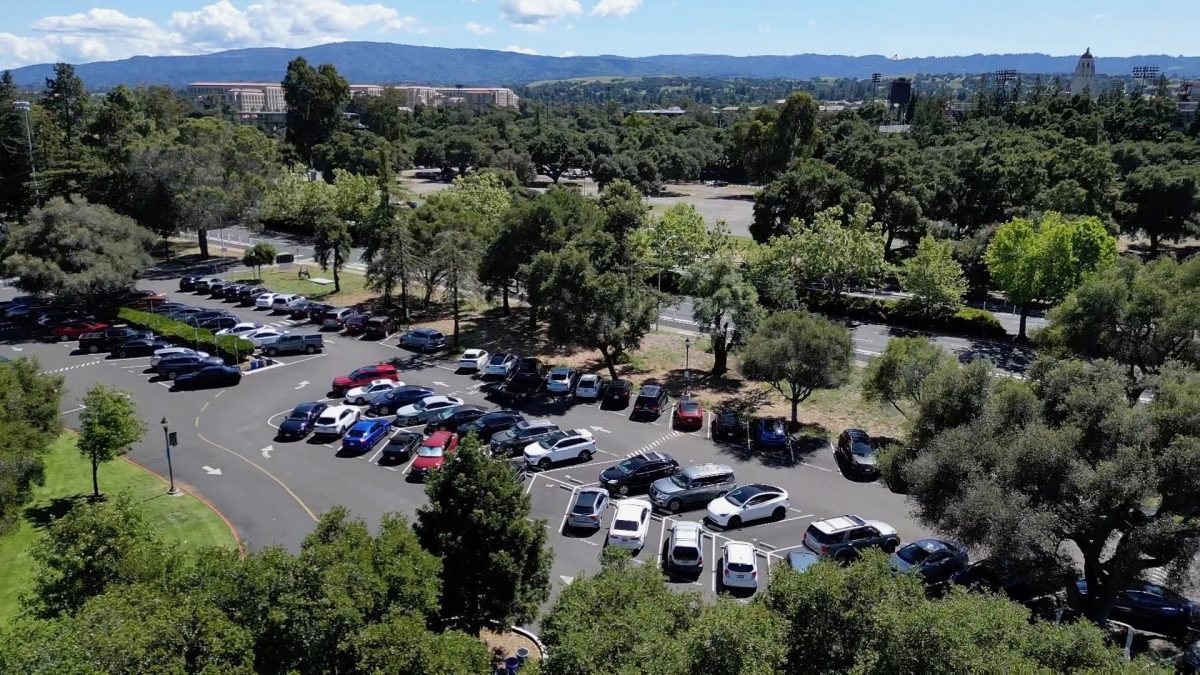
For many Palo Alto High School students, this is what school mornings look like due to the school’s limited number of spaces, people parking without permits and minimal enforcement.
Paly Assistant Principal Jerry Berkson said the number of available parking spaces no longer meets demand, especially as more drivers illegally park on campus without permits.
“If you were to walk through on a crowded parking lot day, which is all the time now, you see how many people don’t have permits, and it’s like 30,” Berkson said.
For years, the school relied on the Palo Alto Police Department to discourage unauthorized parking by ticketing. However, that system has become less consistent as staffing levels at the PAPD have declined, according to Berkson.
“The solution for the last 20 years has been that PAPD comes in and tickets people,” Berkson said. “The PAPD is [now] down people, so they’re not here as often. The tickets aren’t coming.”
Lt. Nicolas Martinez in the PAPD Administrative Services stated in an email that the PAPD enforces parking daily, but cannot always cover every parking zone.
“Parking enforcement is conducted on a daily basis,” Martinez said. “However, depending on staffing, every zone may not be covered. We try our best to respond when we are contacted directly about a parking complaint with staffing and calls for service allowing.”
Berkson said there used to be more parking available in the Southgate neighborhood and along El Camino Real before bike lanes were implemented.
“Students used to park there [Southgate], and the community got together and they made it so you had to have community parking permits, so now students can’t park over there,” Berkson said. “We [also] used to have all those parking spots along El Camino, [before bike lanes].”
According to Martinez, enforcement authority rests solely with the police department, meaning the school cannot issue penalties on its own.
“Parking enforcement is a function of the police department, and the high school can not enforce any penalties,” Martinez said. “This is done to maintain consistency in enforcement and to prevent someone from getting tickets from both the city and the school.”
English teacher Sarah Bartlett said that students parking in teacher spots has had a negative impact on her morning routine, and that teachers need to have priority parking.
“I have had to park in the 10-minute visitor spots,” Bartlett said. “I have had to text Jerry Berkson and ask for permission to park in his administrator parking. … It has made me a little stressed and rushed to get to the classroom. … Teacher spots need to be sacred.”
Paly junior Alexander Lawson, who has a parking permit, said that people without permits taking up spots is unjust.
“If there aren’t enough spots at Paly, the people who need to drive to school are going to get ticketed because they have to park in these two-hour zones, which is not fair,” Lawson said.
In addition, Lawson said many drivers’ actions contribute to disorganization in the parking lot, including unsafe behavior.
“There are issues with people who park illegally in the parking lot, like parking outside of spots and driving the wrong way,” Lawson said. “I’m not sure how much there is that can be done to prevent that, but I think it’s very disorganized, and having more spots available to students would mitigate some of those harms.”
Selling parking permits provides Paly’s Associated Student Body around $21,000 in annual funding, which is above 15% of its yearly revenue, according to ASB’s 2024-25 public financial information.
The lack of parking may persist moving forward. According to Palo Alto Online, the city’s proposed budget includes cutting a community service officer position that helps enforce parking.
While enforcement resources and space remain limited, students and administrators are exploring possible adjustments and will continue working toward solutions that better meet campus needs.
Berkson said potential solutions include increasing police enforcement or issuing fewer permits, though both come with trade-offs: higher enforcement demands more resources, while fewer permits would reduce Paly ASB’s funding for student activities.
“Next year, either PAPD gets more employees to do it [ticket drivers], or we have to sell [fewer] permits, which then affects the ASB budget,” Berkson said. “It’s a tough situation that I don’t have a magical solution for.”