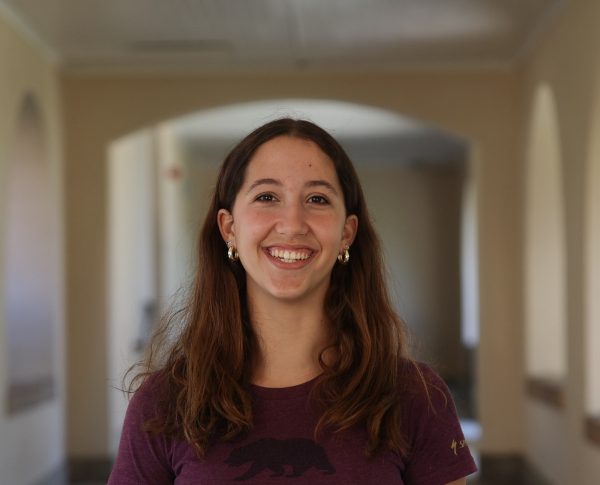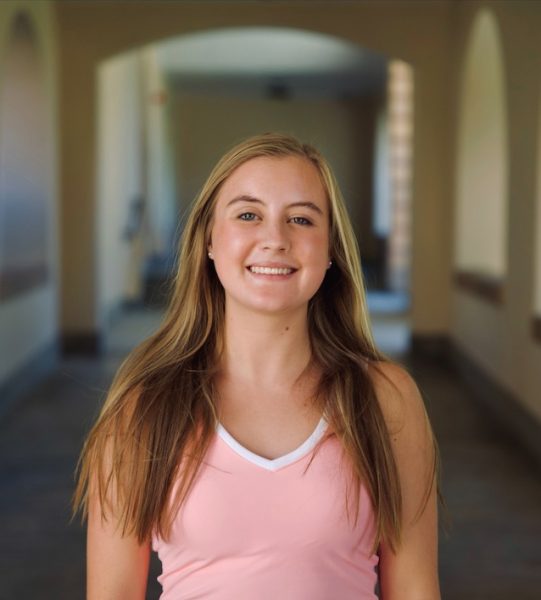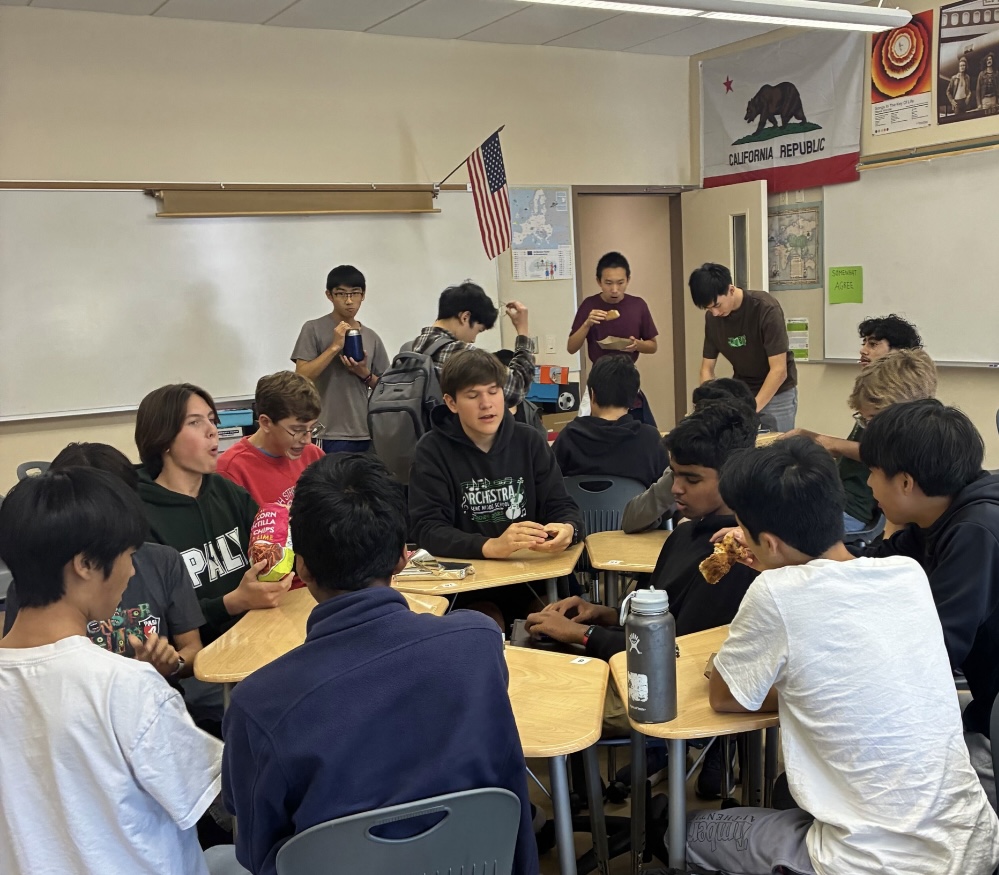
Shuffling cards and easy conversation fill Room 806, where students gather around clusters of tables to play and unwind at Palo Alto High School’s first Poker Club at lunch on Fridays. What began as a crowded group huddled around one slow-moving game has evolved into one of campus’s most relaxed and social weekly meetups.
Since its launch this fall under the sponsorship of history teacher Corbin Dodd, the club has grown from a handful of curious players to a steady group that returns each week for strategy, snacks and low-pressure gameplay.
Junior Meghna Singh, president of Poker Club, explains how the club uses poker chips for bets and players can earn prizes in the form of snacks at the end of lunch depending on how many chips they have left.
Singh said she founded the club after being inspired by late-night card games during her summer academic program in New York City.
“Poker was a very uniting activity,” Singh said. “People from everywhere would sit at one table to play one game. I made a lot of friends through it and I wanted to bring that same energy to Paly.”
Freshman and club vice president Ethan Noar said the club’s atmosphere is what keeps members coming back.
“We have a really close community and we focus on having fun rather than education, like some other clubs do,” Noar said.
According to Singh, creating and maintaining that environment took trial and error. One of the club’s biggest challenges early on was figuring out how to keep meetings organized.
“At first, our meetings were super chaotic,” Singh said. “We would have one huge poker game and that game was super slow. We later broke into smaller games, which were much more efficient.”
Singh said that finding a balance between structure and freedom has made the biggest difference.
“I try to get input from my club members for feedback,” Singh said. “I want this to be a fun environment, not one where it feels like I am being bossy. Taking two or three minutes at the start of each meeting for announcements helps things stay relaxed but not disorganized.”
Members say the small, collaborative touches set the tone for the club. Noar described a moment earlier this year when everyone gathered around a single table and shared snacks during a long game.
“It felt like everyone came together,” Noar said.
As the club looks toward the rest of the year, Singh and Noar said they hope to expand the program by applying for Tier II status, which allows clubs to raise money and go off campus — giving them more flexibility than Tier I groups.
“Figuring out these logistics has been challenging but it would really enhance the club,” Singh said.
According to Singh, the club’s easygoing atmosphere remains its defining feature, especially compared to many other academic-focused groups on campus. While they play a mentally challenging game, members say the mood stays light.
“The relaxed vibe is what makes us different,” Singh said. “It’s not about winning. It’s about connecting, thinking together and having a place on campus where everyone can sit down at the same table.”