Editor’s note: Names of students quoted about the field trip are presented as pseudonyms due to the sensitive nature of the field trip and wide-spanning media coverage of the event.
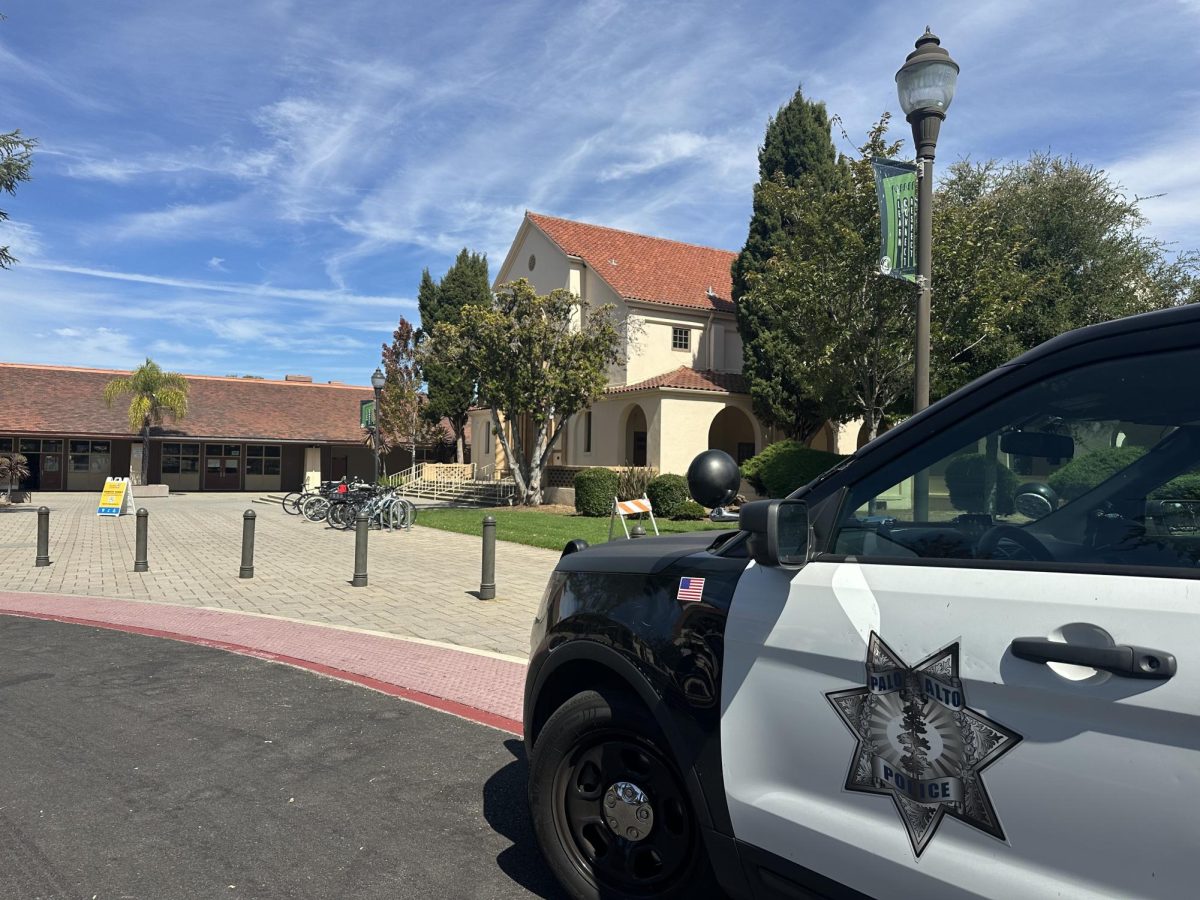
Students and the superintendent are responding to a lawsuit against Palo Alto Unified School District and Palo Alto High School Principal Brent Kline regarding a field trip that has gained global attention.
The suit came after Paly’s Social Justice Pathway visited the Santa Clara Muslim Community Center in November 2025 during the program’s religion unit. The complaint alleges that students were encouraged to wear Islamic religious attire during the visit, in which they were photographed without parental consent. The lawsuit further alleges that students were exposed to “controversial outside speaker” Zahra Billoo without district vetting.
David Rosenberg-Wohl, an attorney who recently represented UCLA professor Leslie Johns in a lawsuit regarding campus anti-Semitism, is representing the Community Members for Religious Neutrality in Public Schools. The group, consisting of Jewish, Hindu, and Zoroastrian members, includes Paly parents Jafi Lipson, Josh Lehrer, former Paly student Sasha Ava Lehrer, community members Pawan Deshpande, Dinsha Mistree and Linor Levav, and other former Paly students and soon-to-be Paly parents who requested anonymity.
New PAUSD superintendent Jason Glass said in a statement to the public that board policy requires that schools must remain neutral when teaching about religions.
“Instruction about religion in our schools must be academic, not devotional,” Glass said. “No faith may be promoted, and no faith may be denigrated. Every family in this district is entitled to expect that standard, and I will review our practice against it.”
Glass said that the district will not comment further on pending litigation.
In interviews with The Paly Voice, students said that the lawsuit came as surprising to them, as they didn’t view the field trip as devotional, but rather as a chance to learn about new culture and history.
Senior Ivy, who identifies as Christian, said that mutual respect was a large aspect of her field trip experience.
“It [the field trip] was really respectful,” Ivy said. “They [Muslim community center workers] never forced us to do anything and we didn’t have to go on the field trip. In SJP, we’re learning about them [religions], and we did a group project where we each dove into a certain religion and learned why they believe these things and what the history is for them. Nobody was forced to convert to a religion. It was like learning about history.”
According to Ivy, the students on the field trip were not forced to wear hijabs as the suit claims.
“I know that if anybody was affiliated with any religion, they didn’t feel like they had to convert to anything,” Ivy said. “We wore the hijabs, but they [the Muslim community center workers] were like ‘If you want to [wear a hijab], you can. It’s respectful in our religion.’”
Rosenberg-Wohl, representing the plaintiffs of the lawsuit, said the action is fundamentally about government neutrality in public education.
“The lawsuit is about making sure that religion, as a state preference, stays out of public schools,” Rosenberg-Wohl told The Paly Voice.
Rosenberg-Wohl said he believes that the SJP field trip unfairly favors Islam over other religions.
“The state, through the school, has said that, ‘In our opinion, if you are a progressive, if you are interested in social justice, Islam is the faith that promotes that,’” Rosenberg-Wohl said. “That is a thumb on the scale in favor of one religion over others, and it has no business being the decision of a school district or the state. That is a private matter.”
According to senior Mary, who identifies as non-denominational, SJP’s religion unit featured many class discussions and presentations about different beliefs and different faiths.
“We talked and had presentations on how a synagogue was run, or how a church mass was held and we were also reading ‘Life of Pi,’ which centered around a lot of different religions,” Mary said. “The year before the field trip, we read a book called ‘Persepolis,’ which was centered around the Islamic regime in Iran and what it was like to be a woman and growing up in that time period.”
Mary said that she also believes it is important that religion is taught in an impartial manner at school.
“Multiple religions should be taught in schools, not just one,” Mary said. “If religion is taught in a very neutral way, it’s good to learn those perspectives.”
Mary said she enjoyed the field trip because it allowed her to learn about Islamic practices and beliefs.
“It definitely was really hands-on and allowed me to learn about religion in a way that I couldn’t get from textbooks,” Mary said.
According to senior Anthony, who identifies as Zoroastrian, students could have learned about Islam without visiting the mosque.
“I don’t think it [visiting the mosque] is the best way [to learn about religion]. It’s definitely a very hands-on way to do it, but there are other ways, like in classrooms or through videos and TED talks,” Anthony said. “It might just not have been the greatest field trip to be had, but I also think it’s important to respect culture.”
Senior Olivia said that since she had little experience with religion prior, she valued the chance to broaden her knowledge and perspectives about other beliefs.
“It was a really positive experience, even though I’m not religious myself,” Olivia said. “They [the Muslim community center workers] were all super nice and welcoming. It gave me insight into a different experience from my own.”