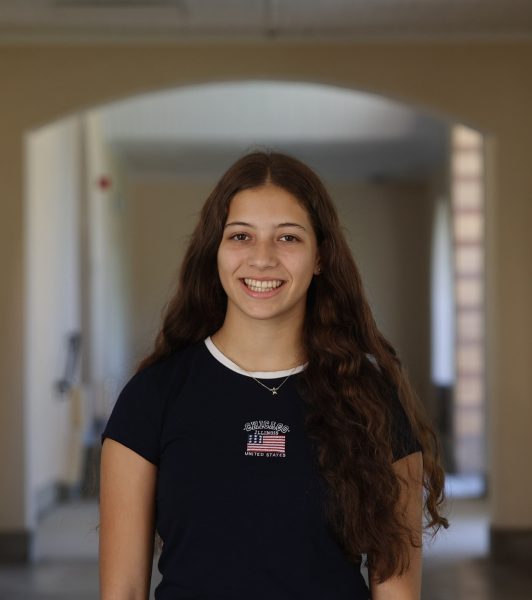
![Crochet Club member sophomore Amber Li creates a yarn heart with self-bought items as the club adjusts to the new reimbursement process at Palo Alto High School. Li said the refunding process requires coordination between two people in their club. “It [reimbursement] is more convenient if you know your secretary and treasurer,” Li said. “There’s a lot of overlap between those jobs [in Crochet Club], but if there isn't, then it might come off as a little bit of a long process."](https://palyvoice.com/wp-content/uploads/2026/03/amber-li-e1773872152566-1200x1090.png)
As Palo Alto Unified School District updates its purchasing policies, students and staff are adjusting to a more centralized reimbursement system, one that aims to reduce out-of-pocket spending but has also created delays and confusion.
According to Budget Secretary Lisa Stone, the process for reimbursement was changed to create a simplified method.
“The reason for the change is for auditing purposes,” Stone said. “It’s a cleaner process and matches with what auditors look for.”
Stone said the system has been gradually changing from an individualized process to one that is more centrally handled by the school and district business office.
“The process has definitely been evolving over the past couple of years,” Stone said. “In the past, anyone who purchased something for the school was eligible for a reimbursement but business services are moving away from that model. Now, they want us to do the purchasing so that individuals don’t have to come out of pocket so much.”
According to Stone, the process of getting reimbursed starts when she receives an invoice. Depending on how much the purchase costs, the process will differ.
“If it [the item to be purchased] is under $600, it goes on an invoice voucher,” Stone said. “If it’s over $600, it has to go on a purchase order. After I process it, it goes to Mr. Berkson for approval, then it goes over to business services for more approvals and they cut the check and mail it to the person’s home address.”
According to home economics teacher Theresa McDermott, who shops for her class on a daily basis, there are several different ways she must get reimbursement for her purchases.
“Typically, I do the shopping, submit the receipts and get reimbursed for the funds spent,” McDermott said. “For items that are needed to support lessons, for example scale rulers, poster boards, markers, etc., I submit my requests to the department lead and those items are ordered through the CTE department.”
Meanwhile, McDermott said that reimbursing appliances requires a different process than for food.
“Other specialized items for the courses that I teach, such as appliances, … fall under a different category in the overall budget,” McDermott said. “If something breaks or is destroyed, it involves a more extensive process in order to get a replacement.”
When buying class snacks, McDermott said she uses her own money as none is provided by the school for this type of purchase.
“For the non-culinary courses, a few times a year, I do spend my own money to bring in a snack for the class,” McDermott said. “I do not use any funds from the culinary/baking and pastry budget to provide the snack. We do not receive any funding for a class snack.”
According to Science Olympiad member junior Inhoo Chang, he has faced setbacks during the reimbursement process.
“We [the team] bought a large shipment of specialized balsa wood to use as part of our Science Olympiad builds,” Chang said. “My parents spent about $1,200 on that whole package … and we were surprised when we saw that it wasn’t reimbursed. … We inquired more about it, and then we got the reply from the district to Lisa Stone to our treasurer to me that it just couldn’t be reimbursed.”
Chang said that he was only informed of the issue regarding the reimbursement much later than expected.
“Apparently, the main issue was that it involved deliveries going to private housing,” Chang said. “The district wasn’t sure if the proper things were being delivered … but nothing about this was told to us prior.”
Chang is undergoing talks with the district and expects the situation to resolve soon. According to Chang, he wishes that the district could be more transparent about changes.
“[The district should] just tell people if they change the policies, because it [the reimbursement process] wasn’t always like this,” Chang said. “They shouldn’t expect people to just know and instead explicitly tell us [students] about these policy changes.”
Amber Li, sophomore and Crochet Club member, said that in the past, reimbursement was easy without any challenges, but this year, it has become a longer process.
“It [the reimbursement process] was pretty easy — I would just write what we would buy and then reimburse it,” Li said. “This year, however, it’s [spending] in the club minutes. You have to apply for reimbursement, then give it a few days for them to process it, then you turn in the receipt. It does take a few days to finalize and we haven’t always gotten our money back.”
However, Li and other Crochet Club leaders have also paid out of pocket multiple times. According to Li, she doesn’t mind paying out of pocket because she sees it as a way to give back to the group.
“Paying out of pocket is a way … to give back to the club members,” Li said. “I really like the Crochet Club community. The classroom and environment is very nice and I hope to maintain that really comforting environment.”
Stone said she is always available to answer any questions regarding the reimbursement process.
“If there’s a purchase that needs to be made, the best bet is to come to me and see if I can do it with either a purchase order or by using the district credit card to pay,” Stone said.