“Why didn’t our childhood ruin you?”
—Nora, “Sentimental Value”
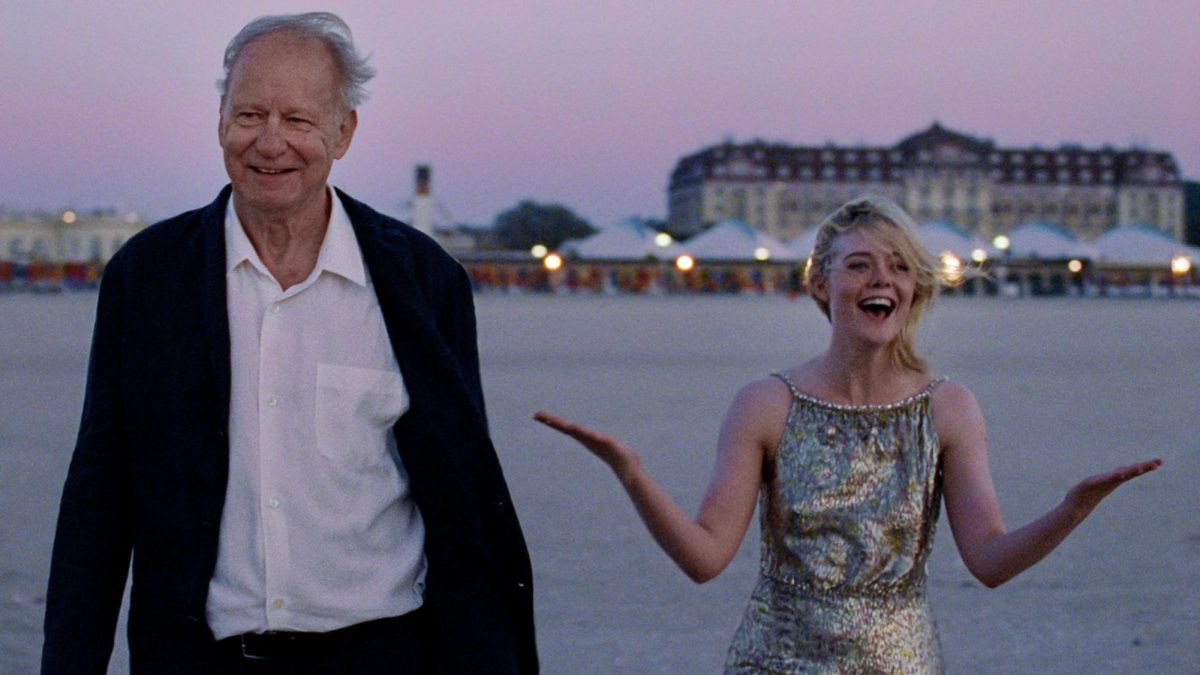
Haunted by the past he left behind, filmmaker Gustav Borg (Stellan Skarsgård) returns home in “Sentimental Value” hoping a new film will help him understand his family’s history, only to discover that some wounds cannot be closed.
Directed by Joachim Trier, “Sentimental Value” premiered at the 2025 Cannes Film Festival on May 21 and was theatrically released on Sept. 12. Nominated for nine Oscar nominations at the 98th Academy Awards, the drama is the first Norwegian film to be nominated for Best Picture.
After years away pursuing his filmmaking career, Borg returns to Oslo following the death of his ex-wife. His daughters, Nora (Renate Reinsve) and Agnes (Inga Ibsdotter Lilleaas), have long resented his absence during their childhood.
The movie centers on Gustav’s attempt to revive both his career and his relationship with Nora through his newest film project. His script draws from his family’s past, telling the story of his mother, Karin, a member of the Norwegian resistance during World War II. Hoping the project might help him reconnect with his daughter, Gustav asks Nora to take on a central role in the film he wrote.
However, Nora simply refuses to participate. Still hurt by her father’s abandonment, she rejects even reading the script and his attempts at reconciliation. Their strained dynamic deepens as Gustav moves forward with the production anyway, eventually offering the role to American actress Rachel Kemp (Elle Fanning).
It is fascinating how the two sisters illustrate the different ways people respond to trauma. Agnes appears to channel her past into stability. She builds a family, raises a child and works as a historian who studies the past in a structured way. Conversely, Nora struggles to process those same emotions even with her success as a stage actress. She suffers from debilitating panic attacks before performances and often presents herself as isolated and emotionally guarded.
Reinsve delivers a powerful performance as Nora, portraying a woman caught between lingering anger and a quiet desire for understanding. Her subtle expressions and restrained dialogue capture the internal struggle of someone forced to confront emotions she has long avoided. Skarsgård complements Reinsve’s performance by his nuanced portrayal of Gustav, with all of his flaws and lack of emotional awareness.
The film was primarily shot in Oslo, Norway, which strengthens its emotional realism. By filming in the same city where the characters grew up, Trier emphasizes how the physical environment holds memories of the past. The quiet streets, muted winter light and traditional Oslo homes mirror the film’s reflective tone, suggesting the past still lingers in familiar places.
Visually, the film embraces a rather quiet and intimate style. Specifically, Trier’s cinematography relies on natural lighting and carefully framed close-ups, allowing the characters’ subtle reactions to carry most of the emotional weight in every moment. The frequent scenes set within the Borg family home reveal the lingering presence of memory, effectively illustrating how the past continues to shape the present.
The film’s emotional scale and contemporary relevance are outstanding as Trier crafts “Sentimental Value” around undeniably human conflicts that capture modern life. Everyday elements such as careers and complicated relationships are incorporated naturally and do not distract from the main plot.
The film’s soundtrack is subtle but emotionally effective. Rather than relying on dramatic music, Trier uses a quieter score that reflects the film’s introspective tone. Soft piano pieces and minimal orchestration appear during moments of reflection, allowing the characters’ emotions to take center stage. This restrained use of music helps emphasize the tension and distance within the Borg family, while also highlighting the film’s themes of memory and unresolved grief.
Although “Sentimental Value” unfolds at a rather slow pace compared to many modern dramas with over 2 hours of runtime, we thought the deliberate storytelling allows the characters’ emotions to develop naturally. Each conversation and confrontation builds toward a deeper understanding of the complicated bonds within the Borg family.
Like many of Joachim Trier’s films, “Sentimental Value” is less focused on spectacle and more on the quiet emotional realities of everyday life. Through Reinsve’s raw portrayal of Nora and Skarsgård’s layered performance as Gustav, the film captures the complicated ways families carry grief, resentment and love across generations. By intentionally slowing down and lingering on small conversations, silences and memories, Trier invites audiences to reflect on the subtle yet powerful ways the past shapes people’s lives. In doing so, “Sentimental Value” becomes a thoughtful portrait of the human experience and the fragile process of understanding those closest to us.
“Sentimental Value”
2 hours, 13 minutes
Rated R for sexual content, nudity and language
Directed by Joachim Trier
Starring Stellan Skarsgård, Renate Reinsve, Inga Ibsdotter Lilleaas and Elle Fanning