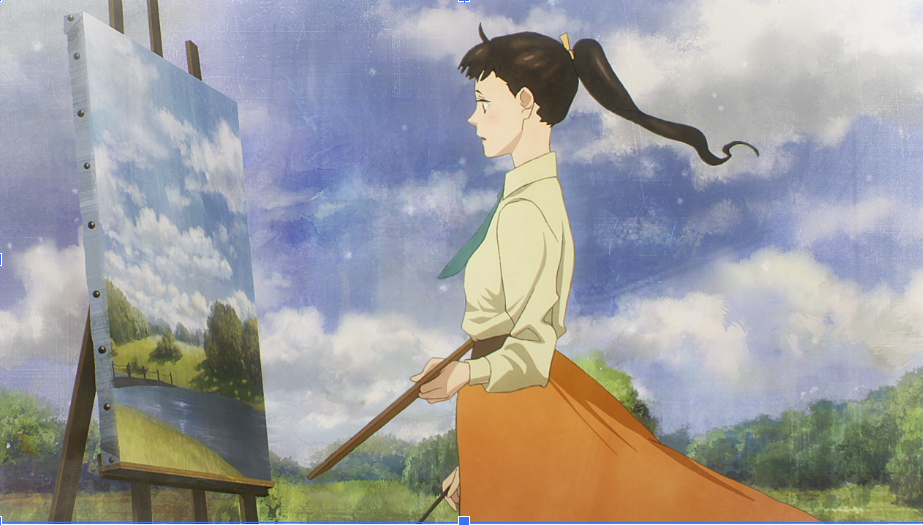
Wit studio-Netflix
Lilli Ichikoin (voiced by Atsumi Tanezaki) reminisces about her time in London while she paints the landscape. In Netflix's "Love Through a Prism".
Spoiler Warning: Minor plot details are discussed below.
In the world of coming-of-age stories, few things hit as hard as chasing a dream when the odds feel stacked against you. Netflix’s original animated series “Love Through a Prism,” directed by Kazuto Nakazawa, uses that familiar idea but builds a story where relationships, culture and social class are woven together into something genuinely moving.
The story unfolds in the early twentieth century, on the precipice of World War I, in the cobblestone streets of London. Lilli Ichikoin (Atsumi Tanezaki) arrives from Japan with nothing but her paintings, her ambitions and the weight of her parents’ expectations pressing against her shoulders. Enrolled as an exchange student at the Saint Thomas Art Academy, Lilli faces an ultimatum that will determine the trajectory of her entire life: Rise to the top of her class within six months, or return home and abandon her dream entirely.
It is within these high-pressure halls that she encounters Kit Church (Koki Uchiyama), a prodigious, aristocratic student whose technical brilliance is matched only by his profound emotional detachment. Kit has walled himself away from genuine connection, devoted entirely to his craft and the pursuit of perfection on canvas. However, Lilli’s unwavering sincerity and quiet resilience begin to crack through barriers he had spent years constructing. Though the two share little beyond their mutual devotion to art, their relationship rapidly becomes the center around which life at the academy revolves, transforming not only themselves but everyone around them.
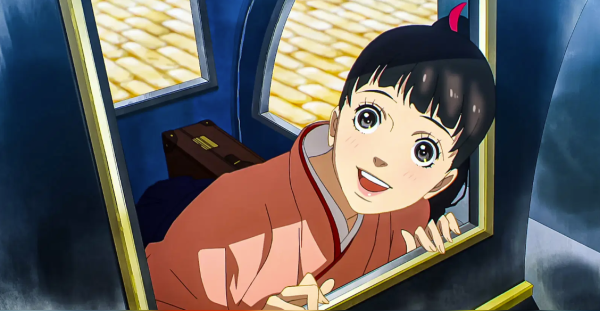
The way “Love Through a Prism” handles audience expectations within its almost painfully familiar setup to other coming-of-age and romance anime often left me feeling divided while watching. There are stretches of the story that are laughably predictable — love-triangle rivalry, dramatic misunderstandings, silly falls, romantic catches — yet they’re mixed with less obvious developments and genuinely clever moments.
The characters also make choices that feel realistic and bittersweet. Dorothy (Megumi Han), Lili’s best friend, has a crush on another friend, Joffrey (Yohei Azakami), an aristocrat. Even when their feelings are confirmed mutual, she chooses to go home to her arranged marriage, admitting that while Joffrey would make a good boyfriend, he would not make a good husband. I was happily surprised by this development because I’m sick of seeing most love stories reduced to the message “follow your heart”. Seeing Dorothy distinguish between short-term romantic compatibility and lifelong partnership not only shows her maturity but also mirrors real-life choices many face but rarely see in the media. Kit also makes his own sacrifices. Despite resenting the aristocracy, Kit eventually assumes his duties as a diplomat when World War I begins, leaving behind Lilli and even his love of painting. What I admire about his choice is that love is often portrayed as an all-consuming force that justifies abandoning everything else. But in reality, most of us can’t and shouldn’t drop our responsibilities for romance. Kit’s story is a great example of how adulthood isn’t about giving up on dreams but adapting and reshaping them, and seeing his arc is something far more inspiring than any grand, self-destructive romance.
At the end of the day, are these endings idealistic? Not exactly. But I appreciate how they reflect the way life sometimes turns out: The right person at the wrong time, the damage caused by silence, and the kind of uncontrollable circumstances, like war, that tear everything apart.
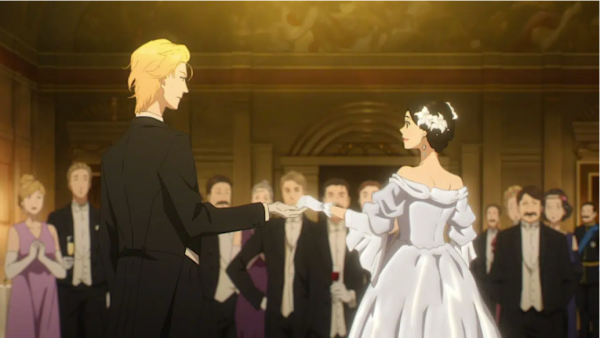
“Love Through a Prism” may advertise itself as a romantic anime, but by the end, you’ll leave with a multitude of stories about love. And no, not just the romantic kind, but the love you discover when you make friends who feel tighter than family, the love you feel after creating something meaningful, and most of all, the love that keeps you going. Something that stood out to me was that, unlike many coming-of-age stories set in high school, these characters are in their early 20s, and you witness firsthand the core memories they form as they each search for identity and purpose. Even better, the series doesn’t confine itself to Lilli and Kit alone; it gives their friends full arcs too, each with a beginning, middle, and end wrapped neatly into the show’s twenty episodes.
While the show does fall into familiar romantic-rival traps, it still succeeds in character-building. Shin (Yuki Kaji), a Japanese classmate, is positioned as another contender for Lilli’s feelings, and Catherine (Sumire Uesake), Kit’s lifelong fiancée, could easily become a one-note antagonist. Instead, these characters are treated as human: flawed, jealous, frustrated, yet capable of growth, understanding and maturity. Over time, rivalry gives way to connection. Shin and Kit become good friends, with Kit inspiring Shin to go to Italy to pursue his dream of carving. Catherine and Lilli eventually work together to promote Lilli’s family’s kimono business.
Netflix has produced standout anime in recent years, with my favorites being “Blue Eye Samurai” and “Hell’s Paradise,” but this one hit the mark in a different way: It’s gentle, human, and unexpectedly thoughtful. Instead of showing powerful figures who have superhuman abilities, it shows Lilli crossing borders and cultures, while addressing challenges that many people, including me, have experienced. Specifically, seeing how the show addresses the stereotypes immigrants often face through Lilis’ interactions with Dorothy, who often compares her to a samurai and a ninja hit close to home.
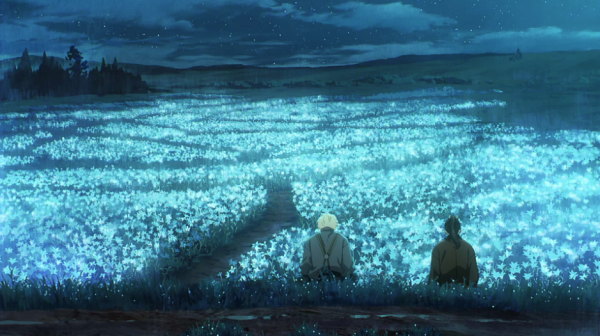
Visually, the series borrows elements of fantasy from ordinary life. Its backgrounds feature real locations around England, painted in a soft watercolor style that makes the world feel dreamlike without losing realism. One of the most apparent motifs is color itself; the show turns black-and-white after Kit disappears, draining the vibrancy from Lilli’s life, and slowly returns when she finds both her passion for drawing and her way back to him.
According to senior Keshav Vasudeva, the most standout moment in the show was the reunion between Kit and Lili.
“I thought the scene when Lili and Kit finally see each other again after five years was really well done,” Vasudeva said. “The music, the ambiance, everything was spot on.”
The anime has 32 song tracks, and while they all follow somewhat of the same melody, each has its own charm that perfectly fits the mood of the scene. The songs are all instrumental, with a heavy emphasis on string instruments and the piano, giving the soundtrack a classical and cinematic feel that elevates the storytelling.
Overall, “Love Through a Prism” delivers a warm, well-rounded viewing experience. There were definitely hair-tearing moments of miscommunication and bad timing — but honestly, that’s part of life. I’d recommend this series to anyone who wants a breath of fresh air beyond a typical romance anime and a reminder to appreciate what’s around you while continuing to chase your passions.
“Love through a prism”
30 minutes per episode
Rated TV-PG for mild themes
Directed by Kazuto Nakazawa
Starring Atsumi Tanezaki and Koki Uchiyama