Universal Pictures
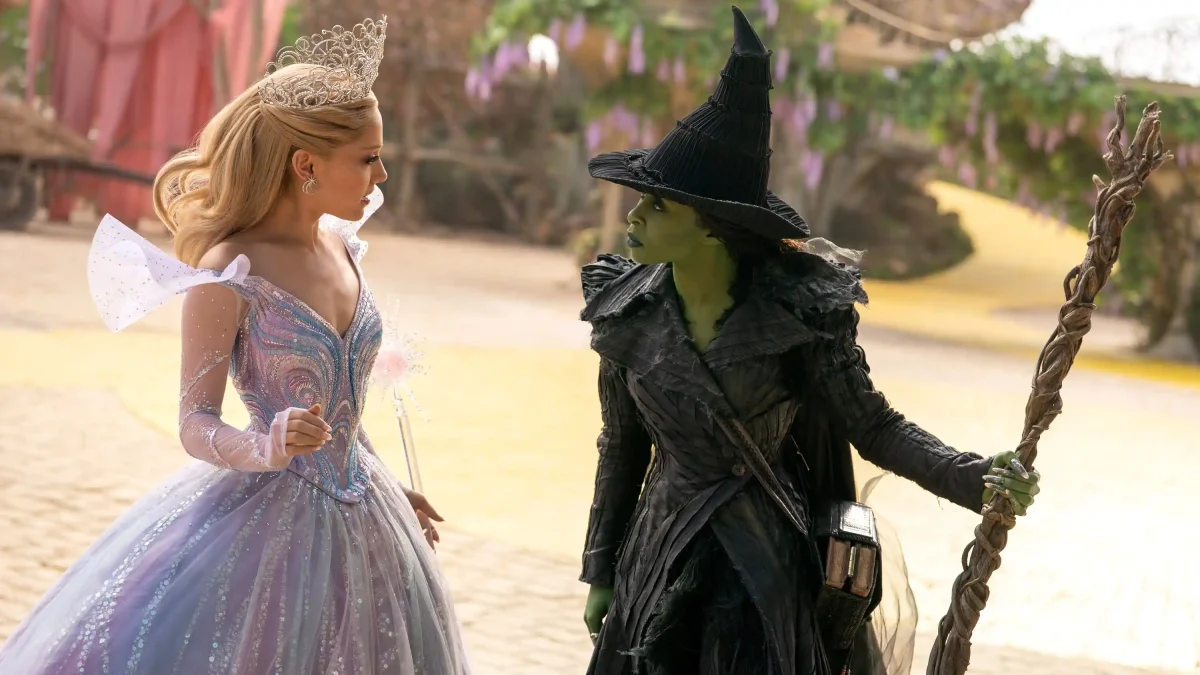
Elphaba (Cynthia Erivo) and Glinda (Ariana Grande) quarrel after Glinda gives Nessa's ruby slippers to Dorothy, sparking Elphaba's furious reaction in "Wicked: For Good."
After a year of anticipation following the cliffhanger ending of the first “Wicked” film, “Wicked: For Good” finally premiered in theaters over Thanksgiving break, with all the glitter, magic and vocals expected from the iconic Broadway musical. Directed by Palo Alto-born Jon M. Chu, the second part expands on the world of Oz while introducing new songs, characters, and twists on fan favorites. Despite some imbalances in character development, Glinda and Elphaba’s story is brought to life in a way that no fan should pass up on.
Picking up a few years after “Defying Gravity,” the signature ending song from the first film, the story follows Elphaba (Cynthia Erivo) and Glinda (Ariana Grande) as their lives diverge. Elphaba lives in hiding after discovering the Wizard (Jeff Goldblum) is a fraud, determined to fight his corrupt regime. Meanwhile, Glinda settles into her new role as “Glinda the Good” in the Emerald City. Their diverging paths are the foundation for the movie as the two former friends navigate power, loyalty, and the consequences of choosing different sides.
The film slows down during Glinda and Fiyero’s wedding, which surprisingly includes Glinda in “Wonderful,” a major change from the original Broadway musical, and develops Elphaba’s character arc as her relationship with Glinda falters.
Then, with little buildup, we are introduced to the Scarecrow, who joins the Cowardly Lion (Colman Domingo), Dorothy (Bethany Weaver), and the Tin Man (Ethan Slater) in “The March of Witch Hunters.” Although the Tin Man’s intensity gives the song the power it needs, the scene feels unnecessary since the film never shows the group actually pursuing her. Although integrating the original “Wizard of Oz” plot was necessary for a seamless feel, accuracies to the Broadway musical were unfortunately highly sacrificed.
Erivo once again delivers a powerful performance. Her voice carries raw emotion that left us teary-eyed during “As Long As You’re Mine” with Fiyero and the finale “For Good” with Glinda. Grande’s Glinda remains bubbly and comedic when needed, yet transitions to heartbreaking conflict seamlessly. However, it feels as if the movie is more focused on hitting the drama than letting her character’s transformation breathe, which affects its emotional balance.
“For Good” is the centerpiece of the film and beautifully captures the bittersweet reality of how friendships change and grow apart. The complicated reality of emotional maturity is especially relevant for students watching, as the song’s message about relationships changing, friends becoming distant, and the pain of letting go hits especially hard.
The film is visually stunning with new details, including Glinda’s pink bullet train and bubble, the Yellow Brick Road, and Elphaba’s forest hideout. However, the use of CGI often seems too obvious and excessive, making some scenes feel careless and rushed. More realistic effects could have grounded these scenes and given them a more immersive feel.
Several plot points feel unevenly developed. Character transformations occur abruptly, while extended sequences like the wedding drag on, making character developmental payoffs less impactful.
The movie debuts two new songs: “No Place Like Home,” performed by Erivo, and “The Girl in the Bubble,” performed by Grande. While both are performed beautifully, they felt unessential and added length to the 2-hour and 17-minute runtime without the corresponding emotional weight.
The decision to split the story into two films remains a controversial choice among critics. For many viewers, part two feels stretched as it expands moments that didn’t need more time while rushing through others with more significance. This imbalance leaves the structure feeling more financially motivated than creatively driven.
Some viewers, including Palo Alto High School freshman Mustafa Guler, who attended an early screening of the movie on Nov. 19, felt like the iconic songs from the first movie were hard to beat.
“I love Cynthia and Ariana’s performances, how their voices blend really well together,” Guler said. “I don’t think the songs were as good in the new movie, though.”
Casting choices also sparked conversation among fans. Michelle Yeoh’s portrayal of Madame Morrible continues to be met with mixed responses.
One X post reads, “It’s so funny how Michelle Yeoh simply cannot sing.”
Others, like Guler, think Yeoh perfectly portrayed Morrible’s personality.
“She embodied the character exactly how I imagined,” Guler said. “She really conveyed the comedic evil that Broadway loves. I just wish they picked a better singer for the role; she doesn’t have much singing experience.”
Marissa Bode, who made history as an actress with a disability (She uses a wheelchair as she’s paralyzed from the waist down from a car crash.), brings important representation to the screen. However, some viewers felt her performance lacked the vocal strength needed for the devastating song, “The Wicked Witch of the East,” which softened the emotional impact of the moment.
“Wicked: For Good” succeeds in bringing the land of Oz alive in new ways, but inconsistent pacing and heavy CGI weaken it. We loved the iconic soundtrack and ambiance delivered by talented cast members and breathtaking visuals. Overall, it kept the emotion and heart of the original Broadway musical and maintained the energy and impact of the first Wicked film.